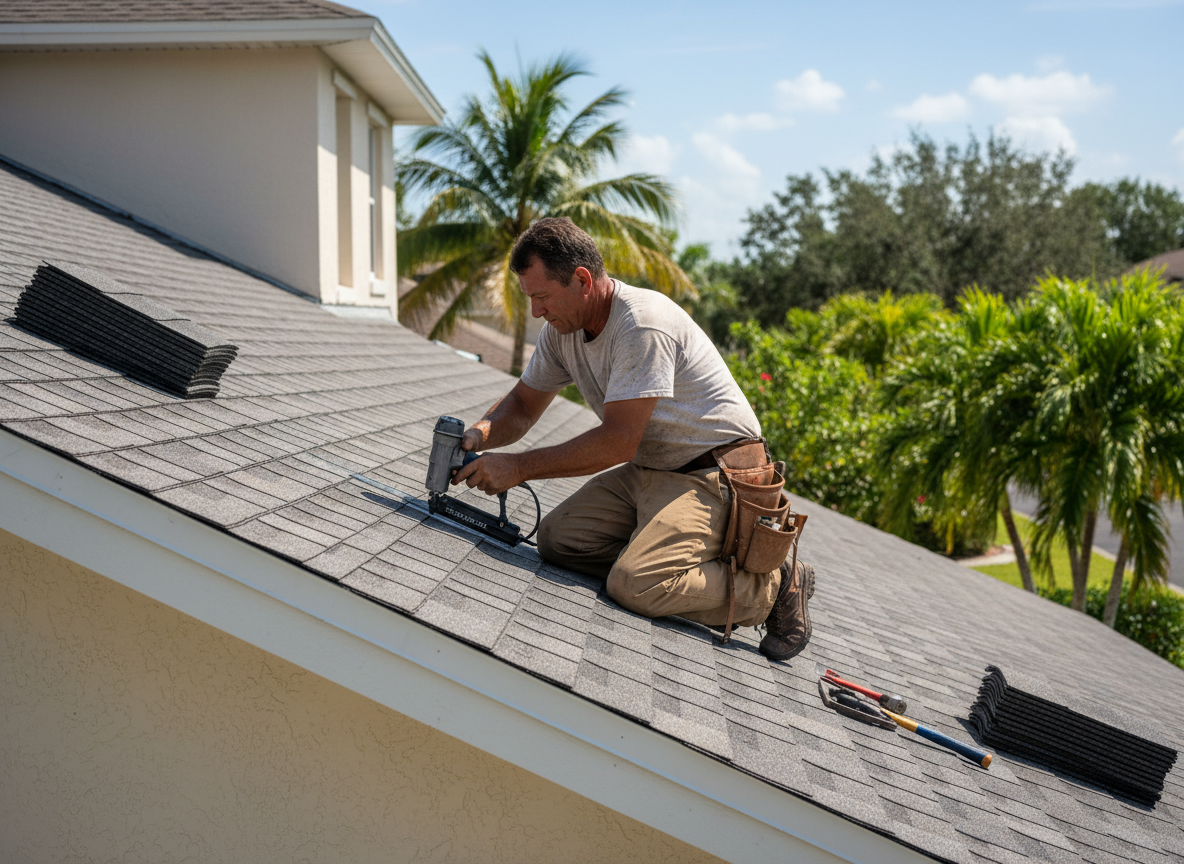
Asphalt shingles remain the most common roof covering on single-family homes in Coconut Creek because they balance cost and wind resistance. In Broward County the combination of intense summer UV, high humidity and frequent afternoon thunderstorms accelerates granule loss and shortens shingle life compared with drier climates. Proper selection of algae-resistant shingles and adequate attic ventilation becomes essential to prevent premature curling and blistering that show up first on south-facing slopes.
Edge cases appear regularly on 1990s and early-2000s homes along Lyons Road and in the Winston Park neighborhood. Many of these roofs were installed with single-layer underlayment that no longer meets current Florida Building Code wind-load requirements for the 130-mph zone. When replacing shingles we often discover deteriorated felt that must be upgraded to synthetic underlayment and additional drip-edge flashing to keep water out during the June-through-November rainy season.
Homeowners frequently underestimate how quickly leaks develop once shingles lose flexibility. Small nail pops or ridge-cap failures allow water to enter during the short but heavy downpours typical of Coconut Creek. We always check flashing at plumbing vents, skylights and chimneys because these penetrations are the first points of failure when humidity-driven expansion and contraction stress the seals.
Storm Season Preparation
Properly installed asphalt shingles must include hurricane clips and sealed underlayment at eaves and valleys. We also verify ridge venting meets code so hot moist air can escape rather than condense under the decking during the long humid summers.
Technician insight
In Coconut Creek, the thing that catches most people out with Asphalt Shingle Roofing is how quickly constant humidity and sudden 60-mph thunderstorm gusts degrade the underlayment on 25-year-old roofs around Lyons Road and Winston Park. Homeowners often skip checking attic ventilation, so moisture builds up and ruins new shingles within a few seasons.
Thunderstorm Damage on Lyons Road
A Coconut Creek homeowner noticed water stains after repeated afternoon storms. We found lifted shingles and saturated felt along the east-facing eaves. We replaced the underlayment with synthetic material, installed new wind-rated shingles and added sealed flashing at the valleys. The roof now sheds water during the heaviest local downpours without intrusion.
How it works
- 1
On-Site Assessment
We inspect the entire roof surface, attic ventilation and flashing details from our base at 5379 Lyons Rd.
- 2
Material Selection
Recommend wind-rated asphalt shingles suited to Coconut Creek humidity and storm exposure.
- 3
Tear-Off and Preparation
Remove existing layers, replace damaged decking and install upgraded synthetic underlayment.
- 4
Installation
Lay shingles with proper nailing pattern, sealed valleys and reinforced ridge details.
- 5
Final Walk-Through
Review work with homeowner and provide maintenance guidance for local weather conditions.
Pricing
Upfront quotes provided after inspection; final price depends on roof size, layers and any decking repairs required.