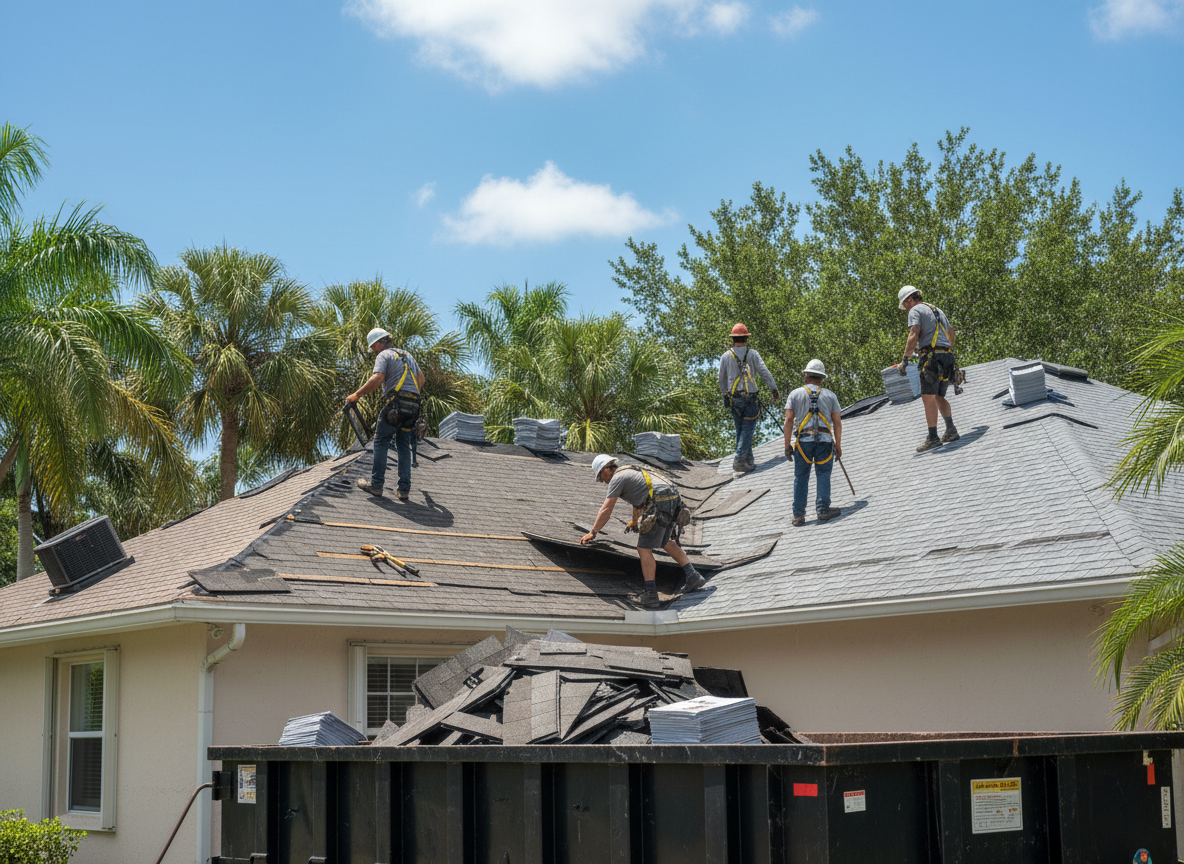
Coconut Creek homes near Lyons Road often feature asphalt shingle or tile roofs installed decades ago that now face repeated exposure to high winds and heavy summer downpours. Replacement begins with a full deck inspection because moisture trapped under old underlayment can rot plywood sheathing before new materials go on. Local building requirements call for updated hurricane clips and proper ventilation to handle the area’s humidity and occasional tropical storms that push water under flashing at valleys and chimneys.
Choosing between architectural shingles and metal panels depends on the house age and roof pitch common in Coconut Creek subdivisions. Older single-story ranch homes benefit from lighter architectural shingles that meet current wind-load standards without overloading trusses. Metal requires different underlayment and sealing at every seam to prevent leaks during the intense afternoon thunderstorms that hit the region most months of the year. Crews remove existing layers completely rather than layering to avoid adding weight that can affect attic ventilation and increase heat buildup inside the home.
Edge details around skylights, plumbing vents, and solar panel mounts demand extra attention in Coconut Creek because constant heat expansion and contraction loosens seals faster than in drier climates. Replacement includes new drip edge along all eaves and new step flashing at walls to keep water out during the heavy rains that follow hurricane season. Homeowners should expect the job to take several days because crews work around the daily thunderstorm pattern and must secure the roof each evening before leaving the site.
Technician insight
In Coconut Creek, the thing that catches most people out with Roof Replacement is how quickly afternoon thunderstorms soak old felt underlayment on homes built before the mid-1990s code updates, especially on the flat sections around Lyons Road where poor attic ventilation lets moisture sit for weeks.
Shingle Failure After Summer Storms
Homeowner near 5379 Lyons Rd noticed leaks in two bedrooms after repeated thunderstorms. Inspection revealed rotted decking under the original shingles and missing clips at the eaves. Crew removed two layers, replaced damaged plywood, installed new synthetic underlayment and architectural shingles with updated flashing. No further leaks reported after the next heavy rain.
How it works
- 1
Site Assessment
Inspect decking, flashing, and ventilation at the Coconut Creek address to identify hidden moisture or structural issues before any tear-off begins.
- 2
Material Selection
Review shingle or metal options that satisfy local wind codes and match the home’s existing pitch and neighborhood style.
- 3
Tear-Off and Deck Repair
Remove all existing layers, replace damaged plywood, and install new underlayment rated for Florida humidity and storm exposure.
- 4
Installation and Final Inspection
Apply new roofing with updated flashing and ventilation, then walk the roof with the homeowner to confirm every penetration and edge is sealed.
Pricing
Upfront quotes provided after on-site inspection; cost varies with roof size, pitch, and material choice.