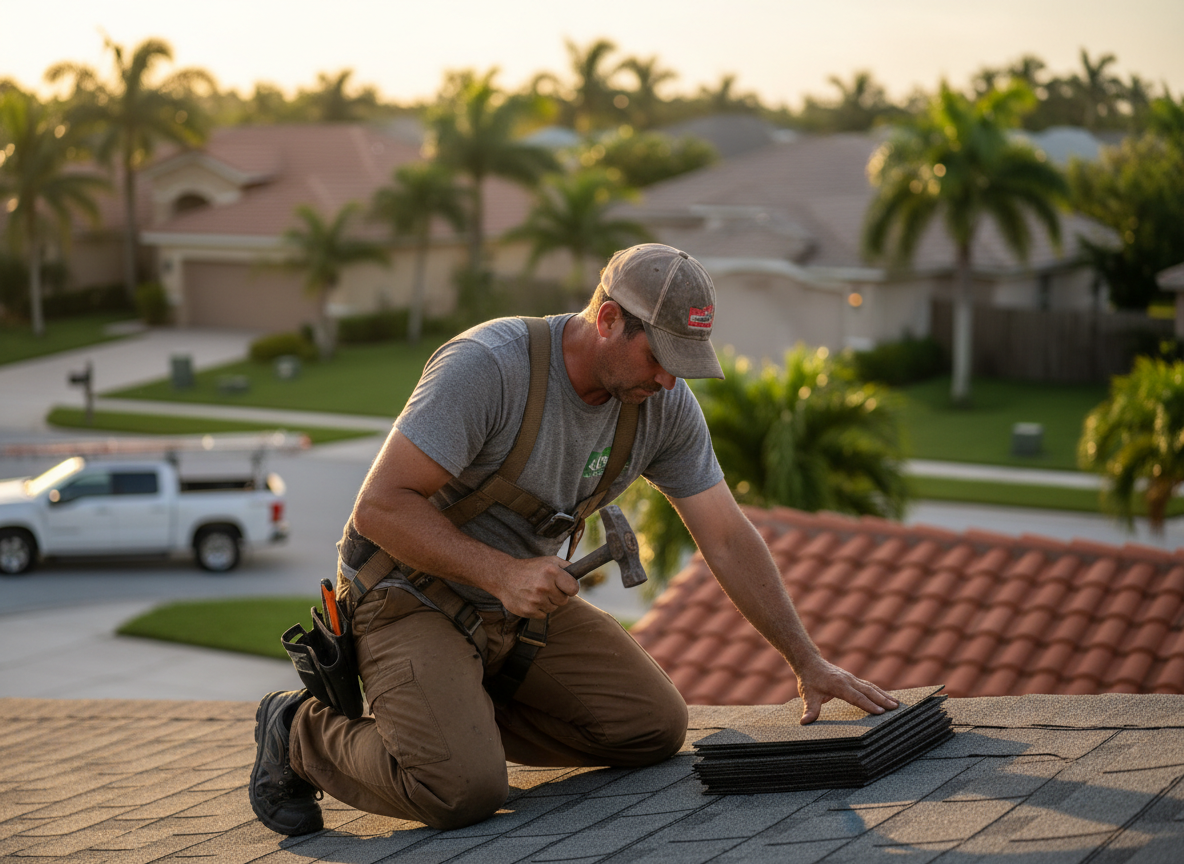
Coconut Creek homes built from the late 1980s through the early 2000s commonly feature concrete tile roofs over plywood decks. These roofs face repeated exposure to afternoon thunderstorms, high humidity, and occasional tropical storms that drive water under lifted tiles or around aging flashing. A roofing contractor here must check for corroded hurricane clips and deteriorated underlayment that standard visual inspections often miss, especially on north-facing slopes where shade keeps moisture trapped longer.
Broward County enforces the Florida Building Code wind-load requirements that demand specific nailing patterns and ridge vents rated for 130 mph gusts. When replacing sections after storm damage, crews must match existing tile profiles from manufacturers still supplying the original styles used in Wynmoor and Sabal Point. Skipping these details leads to permit failures and insurance claim denials, which is why local operators carry extra stock of matching ridge caps and eave closures rather than substituting generic parts.
Heavy summer rains test every penetration, including skylights, bathroom vents, and solar panel mounts added after original construction. A thorough roofing contractor job includes infrared scanning of suspect areas and replacement of step flashing at stucco walls before the next wet season begins. Homeowners who delay these checks often discover interior ceiling damage only after water migrates along trusses into multiple rooms.
Technician insight
In Coconut Creek, the thing that catches most people out with Local Roofing Contractor is how 1990s tile roofs in neighborhoods like Wynmoor lose their original foam adhesive over time. Summer thunderstorms then push water under the tiles along the north slopes where shade keeps the deck wet for days, rotting plywood before any interior leak appears.
Hidden Deck Rot After Storm
A Coconut Creek homeowner reported ceiling stains following heavy rain. Inspection revealed lifted tiles and rotted plywood on a north-facing section of a 1994-built home. Crews replaced the damaged decking and underlayment, reinstalled matching tiles with updated clips, and verified no active moisture remained.
How it works
- 1
On-Site Inspection
Technician examines the entire roof surface, attic, and all penetrations while documenting existing tile condition, underlayment age, and any prior repairs.
- 2
Code and Damage Assessment
Review of current Broward County wind requirements and identification of sections needing full replacement versus targeted repair.
- 3
Material Selection and Quote
Recommendation of matching concrete tile, synthetic underlayment, and rated ridge vents, followed by a written scope and timeline.
- 4
Execution and Final Walk-Through
Removal of damaged materials, installation of new components per code, and walkthrough with homeowner to verify all work areas.
Pricing
Upfront written quotes provided after inspection; final price depends on roof pitch, access, and extent of deck repairs required.