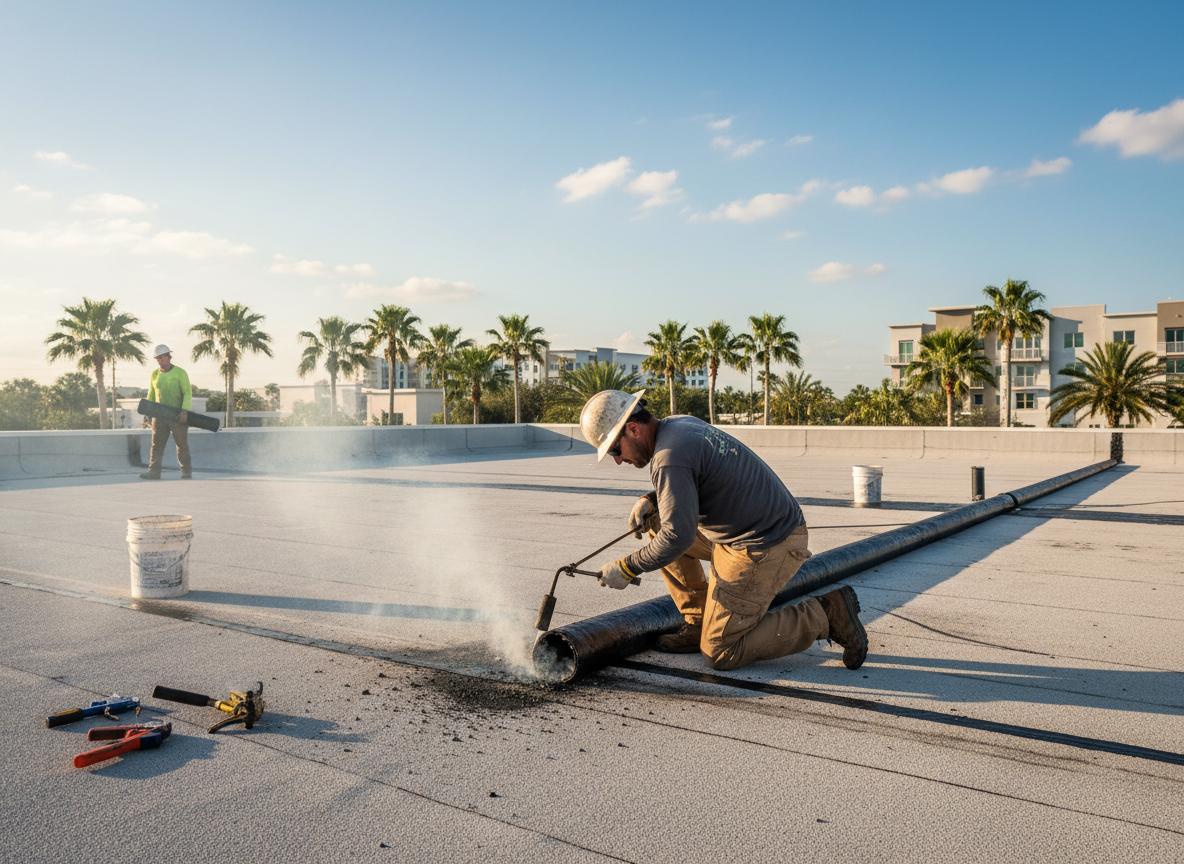
Coconut Creek commercial properties often feature low-slope roofs on single-story retail plazas and light industrial buildings constructed from the 1980s through early 2000s. These roofs face constant UV exposure, standing water after afternoon thunderstorms, and wind-driven rain from tropical systems that move through Broward County. Proper drainage slope and membrane attachment become critical because even minor ponding can accelerate deterioration at seams and penetrations around HVAC units common on these buildings.
We install and repair TPO, EPDM, modified bitumen and built-up systems suited to the local climate. Edge details at parapets and scuppers receive extra attention since wind gusts during storm season can lift poorly secured flashings. Coconut Creek properties near the Turnpike corridor also deal with higher foot traffic from maintenance crews, so we reinforce walk pads around equipment to prevent punctures that lead to leaks into tenant spaces below.
Code compliance with Broward County high-velocity hurricane zone requirements means using approved fastening patterns and uplift-rated assemblies on re-roof projects. We coordinate with property managers to stage work around business hours at the address on Lyons Road and surrounding commercial corridors so operations stay uninterrupted while addressing aged insulation and deck conditions typical in the area.
Technician insight
In Coconut Creek, the thing that catches most people out with Commercial Roofing is how quickly ponding water develops on the flat roofs of 1980s-1990s retail plazas along Sample Road and Lyons Road once the original slope is lost; the mistake is waiting until interior leaks appear instead of addressing insulation and drainage during the first signs of membrane wear.
Strip Plaza Roof Leak Near Lyons Road
A Coconut Creek retail center experienced repeated leaks into two tenant spaces after heavy summer rains. Inspection showed failed seams and wet insulation around several HVAC curbs on the 25-year-old modified bitumen roof. We removed the saturated sections, added tapered insulation for better drainage, and installed new TPO over the affected area while tying into the existing membrane. Tenants reported no further water intrusion during the next storm season.
How it works
- 1
Site Assessment
Inspect the existing membrane, insulation, drainage and penetrations on the commercial roof.
- 2
Scope and Material Selection
Determine repair versus replacement and select membrane type based on building use and exposure.
- 3
Preparation and Removal
Remove damaged sections, address wet insulation and prepare the deck for new materials.
- 4
Installation and Detailing
Apply new membrane with proper seams, flashings and edge securement meeting local wind codes.
- 5
Final Inspection and Handover
Check all seams, drains and penetrations then provide maintenance guidance to the property manager.
Pricing
Upfront quotes provided after on-site inspection; costs vary by roof size, existing condition and chosen membrane system.