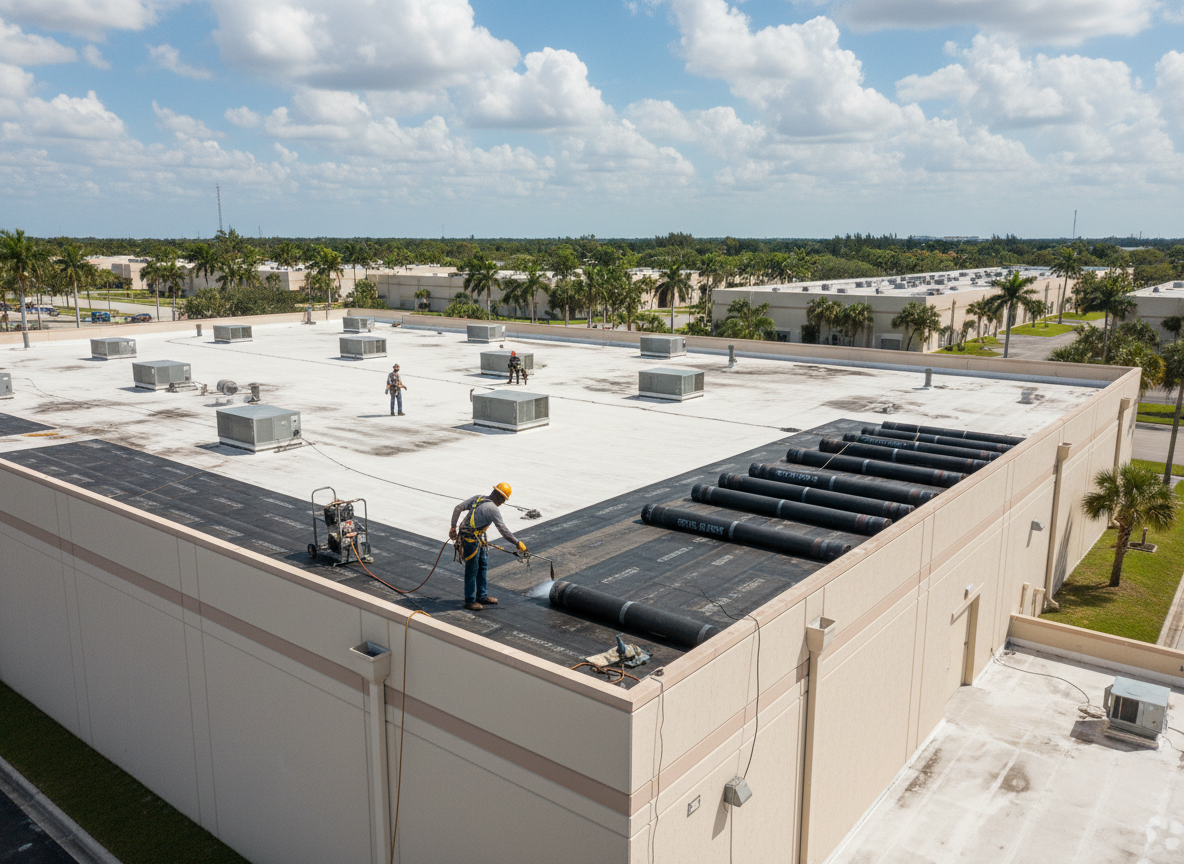
Coconut Creek industrial buildings often feature low-slope modified bitumen or single-ply membranes over steel decks that must withstand repeated heavy downpours and wind-driven rain common in Broward County. Proper seam sealing and drainage slope corrections become critical because standing water from afternoon thunderstorms accelerates blistering and seam failure on older installations. Industrial roof edges at loading docks and HVAC penetrations require reinforced flashing details that account for thermal expansion in the intense summer heat.
Florida Building Code wind-load requirements for the Coconut Creek area demand specific attachment patterns and uplift resistance on industrial metal panel systems. Contractors routinely inspect for corrosion at fastener lines where coastal humidity meets the inland location, especially on structures near the Turnpike or Sample Road corridors. Edge cases include retrofitting existing ballasted roofs when new rooftop equipment is added, which requires load calculations to avoid deck deflection during the wet season.
Work on industrial roofs in Coconut Creek frequently involves coordinating around active operations at warehouses and light manufacturing sites, so crews stage materials to minimize downtime. Night or weekend scheduling is common to avoid interrupting daytime logistics traffic. Material choices lean toward 60-mil TPO or EPDM with heat-welded seams because they handle the combination of UV exposure and sudden temperature drops during evening storms better than older built-up systems.
Technician insight
In Coconut Creek, the thing that catches most people out with Industrial Roofing Contractors is how quickly afternoon storms dump water on flat roofs that lack proper cricket slopes around HVAC units. Older industrial buildings near Lyons Road often have original modified bitumen that has absorbed so much moisture the deck starts to soften before anyone notices interior leaks.
Warehouse Roof Leak Near Sample Road
A distribution facility reported repeated leaks after summer storms. We found failed seams and ponding around rooftop units on the aging single-ply membrane. The crew replaced the wet insulation, added tapered crickets, and installed a new 60-mil TPO system with reinforced flashings. The building stayed dry through the next hurricane season with no further callbacks.
How it works
- 1
Site Assessment
Technicians measure the existing roof, document penetrations, and check deck condition while noting drainage patterns specific to the Coconut Creek industrial layout.
- 2
Material and Code Review
Review wind-load requirements and select appropriate membrane or panel systems rated for Broward County exposure before submitting the scope.
- 3
Preparation and Tear-Off
Remove failed sections or ballast as needed, repair deck damage, and install new insulation or cover boards to restore slope.
- 4
Installation and Detailing
Apply the chosen membrane or metal system with reinforced flashings at all edges, curbs, and drains, followed by final seam testing.
- 5
Final Inspection and Handover
Conduct water testing, document the completed roof, and provide maintenance guidance tailored to local storm patterns.
Pricing
Pricing depends on roof size, existing condition, chosen membrane or metal system, and any required deck or drainage work.