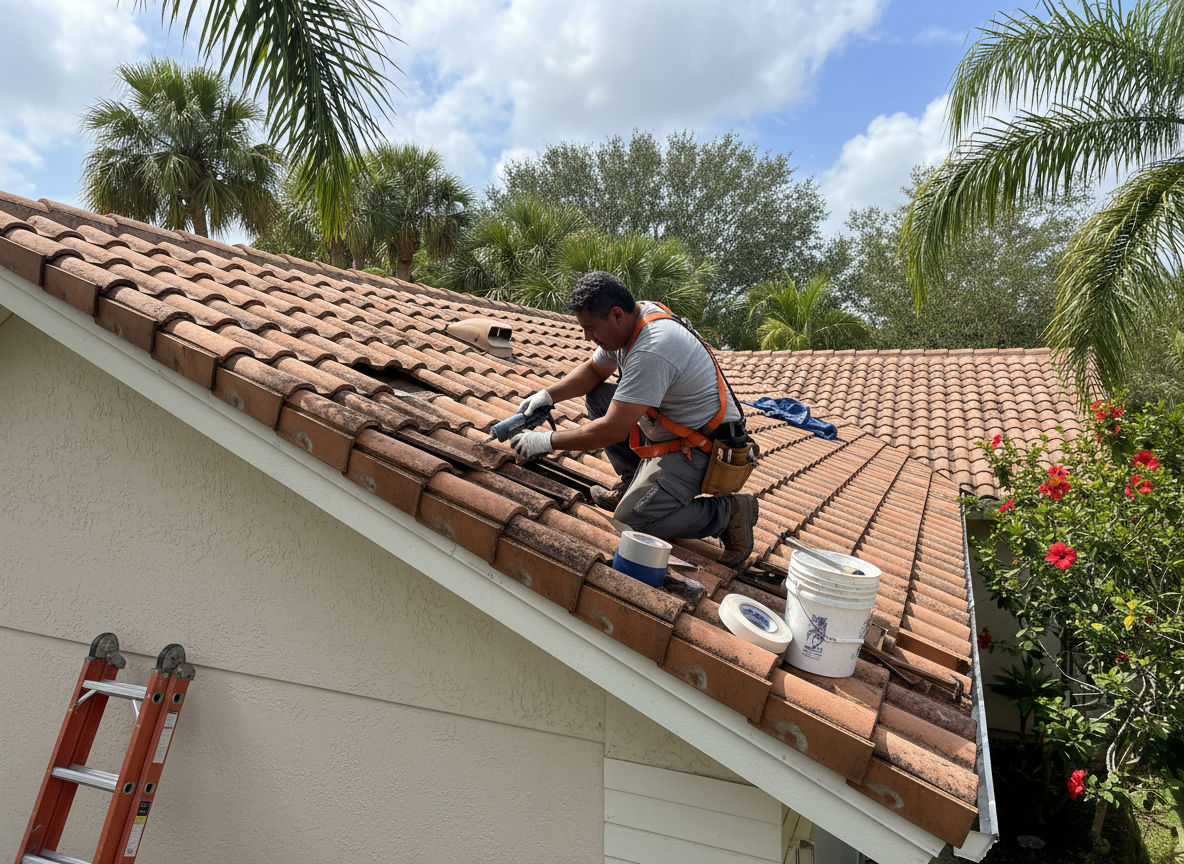
Coconut Creek roofs face repeated saturation from afternoon thunderstorms and tropical systems that drive water under flashing and around vents. Asphalt shingle homes from the 1980s and 1990s in neighborhoods like Winston Park and Palm Crest often develop leaks at ridge caps and valley intersections where wind-driven rain exceeds original underlayment performance. Florida Building Code wind-load requirements now call for enhanced fastening in Broward County, so any repair must address both the immediate breach and the surrounding fasteners that may have loosened over decades of humidity and UV exposure.
Edge cases include tile roofs near the Turnpike corridor where cracked barrel tiles allow water to reach the felt, and low-slope sections on ranch homes where ponding occurs after heavy wet-season rains. Moisture trapped in the deck can lead to interior mold if the leak is not traced to its full extent, especially when soffit vents pull humid air into the attic. We inspect from the ridge down to the eaves and check for deteriorated step flashing at chimneys and skylights that are common on Coconut Creek properties.
Homeowners sometimes attempt sealant-only fixes that fail within one storm cycle because they do not address the underlying deck or underlayment condition. Proper repair requires removal of affected courses, inspection of the deck for rot, and reinstallation with new drip edge and ice-and-water shield where code specifies. This approach prevents repeat callbacks during the next hurricane season when sustained winds test every seam.
Seasonal Guidance
Wet season leaks often appear first at plumbing vents and skylights after June, while post-storm inspections in fall reveal damage to ridge vents and gable ends that only show up once winds exceed 40 mph.
Technician insight
In Coconut Creek the thing that catches most people out with Leaky Roof Fix is how quickly summer thunderstorms push water under the step flashing on 30-year-old homes in neighborhoods like Winston Park; the deck looks fine from below until you pull the shingles and find the rot that started two storms earlier.
Ridge Vent Leak After Afternoon Storm
A homeowner in Coconut Creek noticed ceiling stains after a July thunderstorm. We found the ridge vent cap had lifted on one side, allowing water to run down the felt and into the attic insulation. We replaced the vent section, added new flashing, and sealed the surrounding shingles; the attic stayed dry through the rest of the wet season.
How it works
- 1
Initial Inspection
We arrive at the Coconut Creek address, walk the roof, and document every penetration, flashing, and damaged shingle while noting attic moisture signs.
- 2
Leak Tracing
Using moisture meters and visual checks we trace water paths from interior stains back to the exact entry point, checking for hidden deck damage.
- 3
Targeted Repair
Affected sections are removed, deck is replaced if needed, new underlayment and flashing are installed to current Broward County standards, then matching shingles are laid.
- 4
Final Verification
We recheck the attic after the first rain and provide photos of the completed work for the homeowner's records.
Pricing
Pricing varies by roof access, extent of deck damage, and whether tile or shingle sections are involved; we provide upfront quotes after inspection.