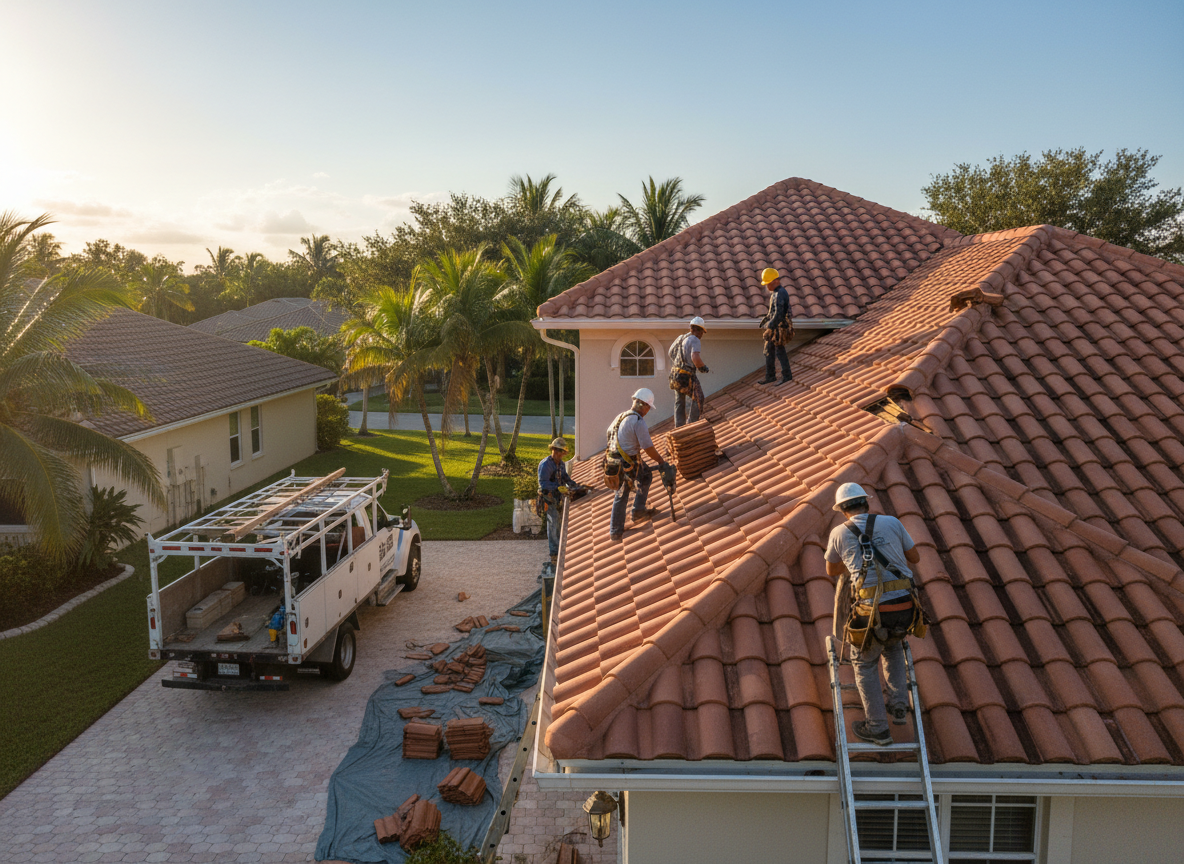
Coconut Creek homes built from the 1980s onward often carry asphalt shingles or concrete tile roofs that face repeated exposure to high humidity and sudden downpours. During summer storms, water finds its way under lifted shingles or cracked tiles along valleys and around plumbing vents, especially on the older single-story ranch styles common in neighborhoods west of Lyons Road. Proper underlayment and flashing details become critical because the flat terrain allows water to pool rather than drain quickly.
Broward County requires roofing permits and inspections that reference the Florida Building Code high-velocity hurricane zone provisions. Contractors must account for uplift pressures on eaves and ridges when replacing roofs on homes near the Turnpike or in the Winston Park area. Skipping proper drip edge or using underlayment that does not meet current standards can fail the final inspection and leave homeowners dealing with leaks during the next rainy season.
Edge cases appear around skylights and solar panel mounts that were added after the original roof installation. These penetrations create extra failure points when sealant ages under intense UV exposure typical in South Florida. Replacing the roof without addressing these details often leads to callbacks within two years.
Homeowners in Coconut Creek frequently overlook the condition of existing decking when only the surface layer is replaced. Soft plywood around attic vents or near bathroom exhausts can go unnoticed until the new roof is installed, at which point the job expands and timelines shift.
Technician insight
In Coconut Creek, the thing that catches most people out with Residential Roofing is the hidden plywood damage around bathroom vents on 1990s homes west of Lyons Road. Homeowners assume the roof surface is the only issue, but once we start the tear-off the decking is soft from years of trapped moisture and the job grows before we can install new underlayment.
Tile Roof Leak Near Winston Park
Homeowner reported water stains on the ceiling after heavy summer rain. Inspection showed cracked concrete tiles and failed flashing at a skylight on a 1994 home. Crew removed the affected section, replaced damaged decking, installed new underlayment and flashing, then matched the existing tile. Leak stopped and county inspection passed without issues.
How it works
- 1
Initial Inspection
Technician climbs the roof and checks shingles, tiles, flashing, and decking condition while noting any attic ventilation issues common in Coconut Creek homes.
- 2
Scope and Material Selection
Review findings with homeowner, discuss shingle or tile options suited to local wind ratings, and confirm permit requirements with Broward County.
- 3
Tear-Off and Deck Preparation
Remove old roofing, replace damaged plywood sections, and install new underlayment and drip edge before new material goes down.
- 4
Installation and Final Inspection
Apply new roofing system, seal all penetrations, and schedule county inspection to close the permit.
Pricing
Upfront quotes provided after on-site inspection; final cost depends on roof size, material choice, and any deck repairs found during tear-off.