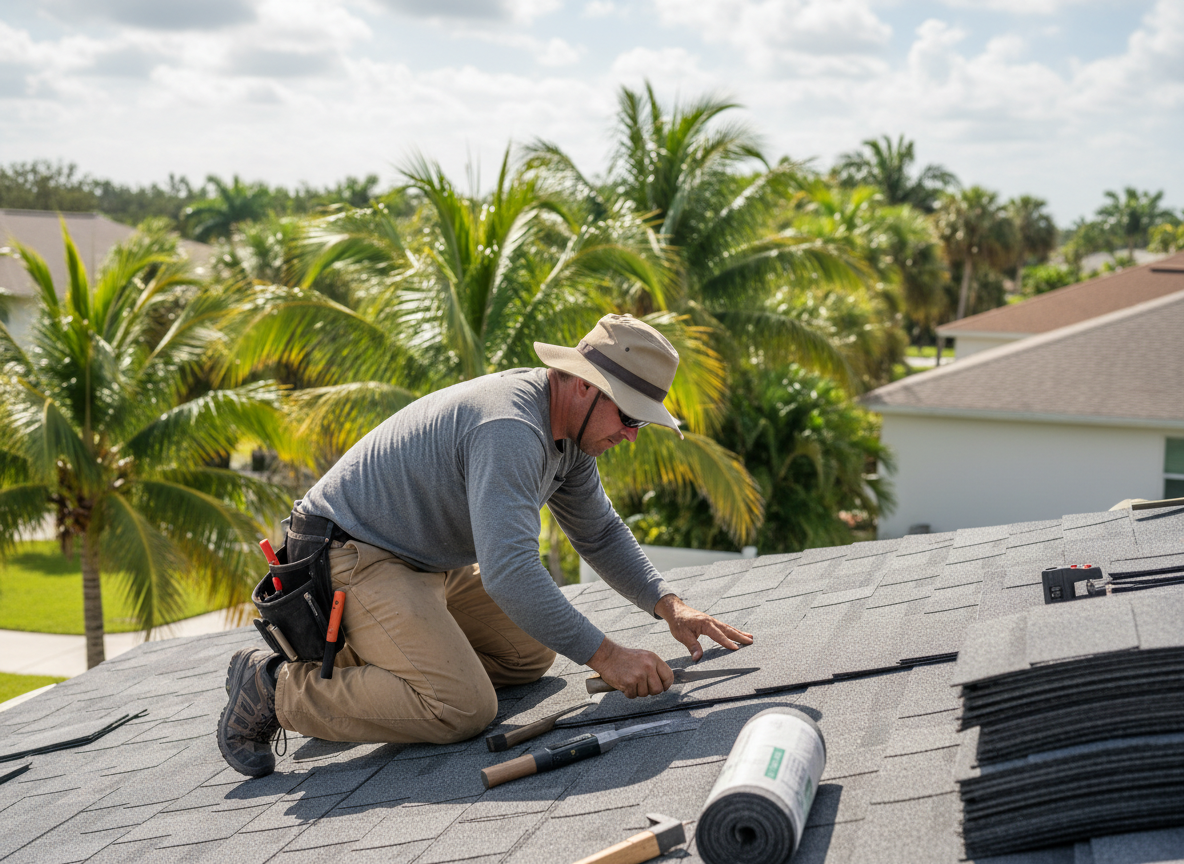
In Coconut Creek, roof coverings must handle constant UV exposure, sudden downpours, and hurricane-force winds common along the Broward County coast. Asphalt shingles remain popular on 1980s-2000s tract homes in neighborhoods like Wynmoor and Palm Crest, while concrete tile dominates newer builds near the Sawgrass Expressway. Proper underlayment and sealed flashing at valleys and penetrations prevent leaks that often appear years later when summer rains arrive. Florida Building Code wind-load requirements in this zone demand specific fastening patterns that many older roofs lack.
Edge cases appear frequently on flat or low-slope sections over garages and additions common in Coconut Creek. Modified bitumen or TPO membranes handle ponding water better than traditional shingles, especially where tree canopy from local preserves drops debris. Homeowners often overlook ridge vent integration during re-covering, which leads to attic moisture buildup once humidity spikes. Matching existing tile profiles on adjacent homes preserves curb appeal and avoids HOA issues in communities around Lyons Road.
Code updates after recent storms require impact-resistant coverings in many Coconut Creek zip codes. Re-covering over existing layers is restricted once two layers are present, forcing full tear-offs that reveal decking rot from prior leaks. Metal panel systems with standing seams offer longevity on exposed ridges but need proper thermal expansion allowances in our heat. Choosing the wrong underlayment for the local soil-driven moisture can shorten service life dramatically.
Technician insight
In Coconut Creek, the thing that catches most people out with Roof Covering is skipping a full tear-off when the second layer is already present. The older homes near Lyons Road often have hidden deck rot from years of trapped moisture under the shingles, and once we open it up the job changes fast. Broward wind codes also force different nailing schedules than people expect.
Tile Re-Cover on 1990s Home
Homeowner in Wynmoor noticed recurring leaks after summer storms. We found two layers of aging tile over compromised felt and rotted decking at the valleys. Removed both layers, replaced damaged plywood, installed new underlayment and impact-rated tile with updated flashing. No further leaks reported after the next rainy season.
How it works
- 1
Site Assessment
Inspect current covering, deck condition, and drainage on the Coconut Creek property.
- 2
Material Selection
Match wind-rated products to the home's slope, age, and surrounding neighborhood standards.
- 3
Preparation and Tear-Off
Remove old layers when required and address any deck or flashing repairs.
- 4
Installation
Apply new covering with code-compliant fastening and sealed details.
- 5
Final Inspection
Check seams, vents, and drainage before cleanup.
Pricing
Cost depends on roof size, slope, existing layer count, and chosen material; we provide upfront quotes after inspection.