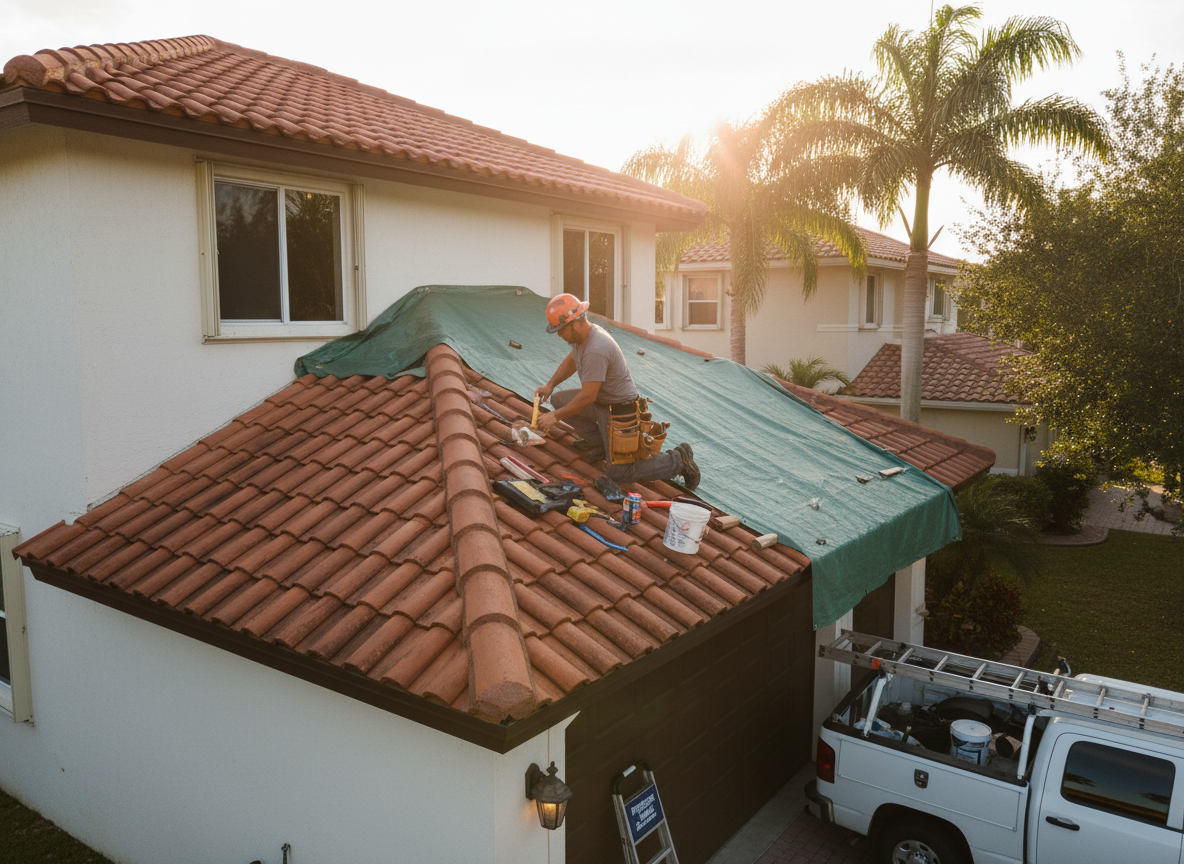
Coconut Creek homes, especially those built from the 1980s through early 2000s in neighborhoods like Winston Park and Sabal Point, often feature concrete tile roofs over plywood decks. Florida's intense summer sun and frequent afternoon thunderstorms accelerate sealant breakdown around pipe boots and step flashings. Regular maintenance involves checking for lifted tiles, inspecting ridge vents for debris, and verifying that hurricane clips remain secure after wind events common along the Atlantic side of Broward County.
High humidity from the nearby Everglades promotes algae and lichen growth on shaded slopes, which can trap moisture against the underlayment and shorten its life. Maintenance visits include gentle pressure washing of affected areas followed by algae-resistant treatment, plus re-sealing around skylights and bathroom vents that are frequent leak points in single-story ranch homes prevalent here. Skipping these steps often leads to deck rot that only shows up after the next named storm.
We also examine gutter alignment and downspout connections because heavy seasonal rains can overwhelm misaligned systems and push water under the drip edge. In Coconut Creek, many lots sit on flat terrain with minimal slope away from the foundation, so any roof edge failure quickly affects stucco walls and interior ceilings. A thorough maintenance round includes torque-checking hurricane straps where accessible and documenting any underlayment exposure before the next hurricane season.
Homeowners in the area benefit from scheduling maintenance right after the rainy season ends in November, when we can address any wind-driven rain damage before the next spring. This timing lets crews work on dry decks and gives sealants time to cure before summer heat returns.
Technician insight
In Coconut Creek, the thing that catches most people out with Roof Maintenance is how quickly north-facing slopes in Winston Park and similar neighborhoods collect algae because of shade from mature trees and constant humidity off the Everglades; homeowners walk right past it until the underlayment starts to fail.
Winston Park Tile Roof
Heavy spring rains exposed small leaks around two skylights on a 1990s tile roof. We found cracked sealant and minor deck softening at the edges. We cleaned the area, replaced the sealant, and added a secondary layer of self-adhered membrane under the affected tiles. The homeowner reported no further interior moisture after the next storm cycle.
How it works
- 1
Visual and Drone Inspection
We examine every slope, valley, and penetration from the ground and air, noting tile condition, flashing integrity, and any signs of prior repairs common on Coconut Creek roofs.
- 2
Debris Removal and Cleaning
Leaves, pine needles, and algae are cleared from valleys and around vents to restore proper drainage before the next rainy season.
- 3
Sealant and Fastener Work
We replace cracked sealant around boots and flashings, tighten loose tile screws, and apply fresh coating where UV has degraded the original material.
- 4
Documentation and Recommendations
Photos and notes are provided so homeowners can track changes over time and plan larger work before hurricane season returns.
Pricing
Pricing varies by roof size, pitch, and condition; we provide an upfront quote after the initial inspection.