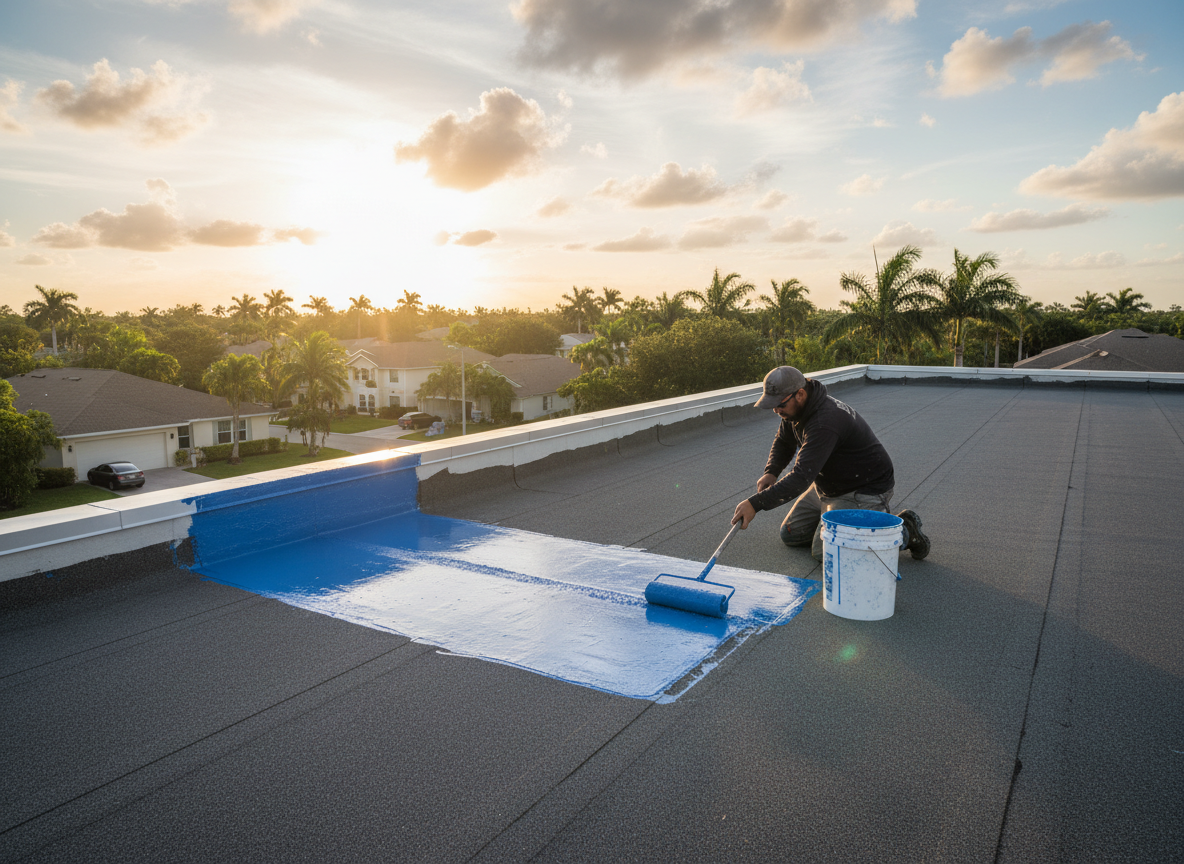
Coconut Creek roofs take constant punishment from afternoon thunderstorms and high humidity that drives moisture into seams and underlayment. Older homes near Lyons Road often have barrel tile or flat sections where water pools after heavy summer storms. Proper waterproofing starts with identifying every penetration, including vents, skylights, and HVAC curbs that sit low on many local structures. We use elastomeric coatings and reinforced membranes that expand and contract with temperature swings rather than cracking like older asphalt products.
Edge cases appear regularly on two-story homes bordering the wetlands where wind-driven rain pushes water upward under flashing. Code requires positive drainage on low-slope sections, yet many re-roofs in the area skip proper cricket installation, leading to repeated leaks. We always verify slope with a laser level and add tapered insulation where needed before coating. Homeowners sometimes attempt DIY sealants around pipe boots; those patches fail within one season because they lack the fabric reinforcement that bridges cracks in the substrate.
During hurricane season we see wind uplift separate poorly adhered membranes on ranch-style homes common west of Sample Road. Waterproofing must tie into the existing underlayment at every edge to prevent water from traveling under the system. We inspect for soft spots in the deck caused by prior leaks and replace sections before applying the final coat. This prevents trapped moisture that would otherwise blister the new waterproof layer within months.
Technician insight
In Coconut Creek, the thing that catches most people out with Roof Waterproofing is how quickly humidity and sudden downpours push water under tile edges on homes built in the 1980s and 1990s around Lyons Road. Homeowners often seal only the obvious spots and miss the fact that older underlayment has already absorbed moisture, so the new coating fails within a year.
Leak After Summer Storms on Flat Section
A homeowner near Coconut Creek's main park noticed water stains after repeated afternoon rains. We found ponding on a low-slope addition where the original coating had cracked at the seams. We repaired the deck, added tapered insulation for drainage, and applied a reinforced elastomeric system tied into the tile roof. No further leaks appeared during the next rainy season.
How it works
- 1
Site Assessment
We walk the entire roof, check attic for moisture signs, and document every penetration and drainage issue specific to Coconut Creek homes.
- 2
Surface Preparation
Remove loose debris, repair damaged tiles or decking, and clean with pressure washing to ensure coating adhesion in the humid local climate.
- 3
Membrane and Coating Application
Apply primer, embed fabric at seams and penetrations, then roll or spray the waterproof coating in multiple passes for full coverage.
- 4
Final Inspection and Drainage Check
Test drainage paths after application and confirm no standing water remains on flat sections common in the area.
Pricing
Upfront quotes after on-site inspection; cost depends on roof size, slope, and existing damage.