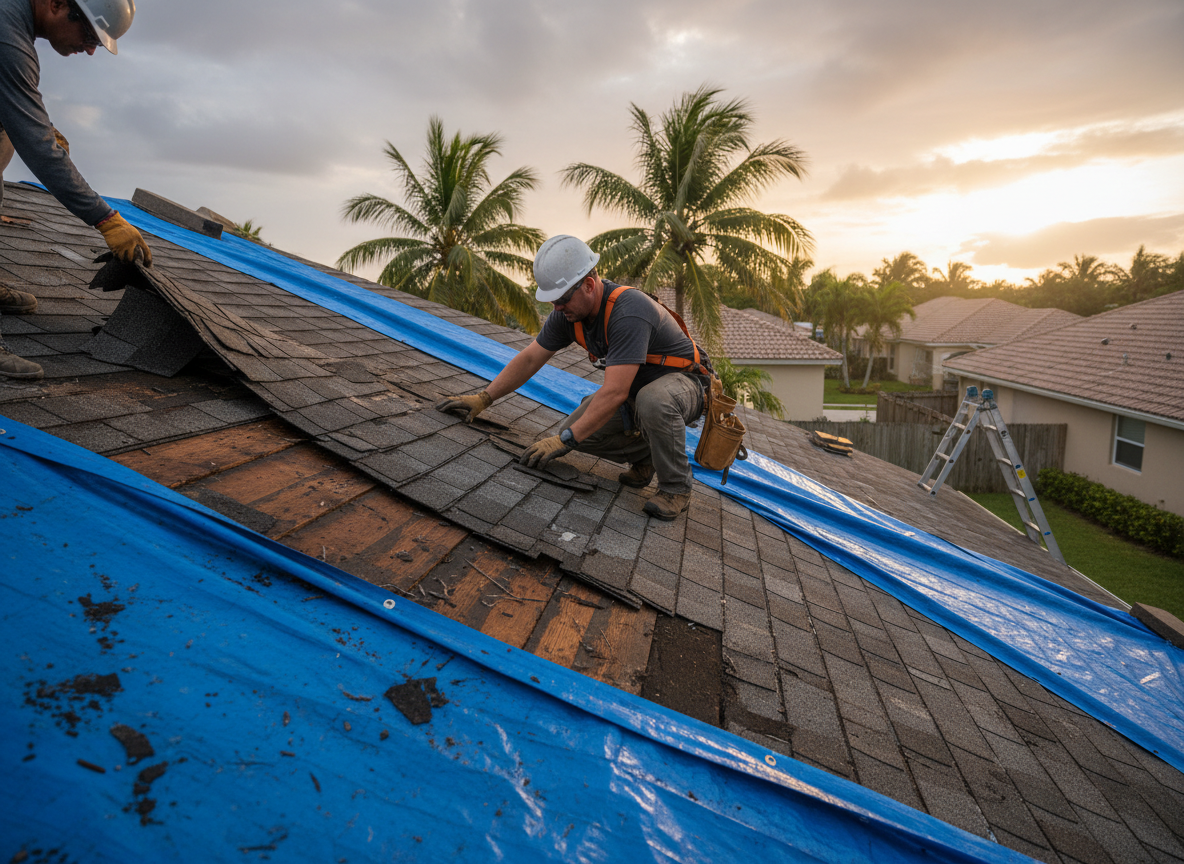
Coconut Creek homes face repeated exposure to high winds and driving rain during Florida's storm season. Asphalt shingle and tile roofs on single-family houses built from the 1980s onward often show lifted edges, cracked tiles, and compromised flashing around chimneys and vents. When these issues go unaddressed, water tracks under the underlayment and reaches the decking, especially on properties near the wetlands where humidity stays elevated year-round.
Repair work here requires matching existing materials while meeting Broward County wind-load standards. Technicians inspect for hidden deck rot after every major weather event, because saturated plywood under tile roofs can fail weeks later even if the surface looks intact. We pull damaged sections, replace underlayment with synthetic products rated for 130 mph gusts, and reinstall tiles or shingles with upgraded clips where wind exposure is highest on north-facing slopes.
Homeowners in neighborhoods like Wynmoor and the areas along Sample Road often discover leaks only after interior ceiling stains appear. Quick temporary tarping prevents further saturation, but permanent fixes must address both the visible impact points and the surrounding weakened areas that storms commonly exploit next. Our crews work from the provided address at 5379 Lyons Rd and remain available around the clock when alerts are issued.
Common Storm-Related Issues
Hidden deck rot under tile, lifted ridge vents, and flashing failures at skylights are the three failures we see most after tropical storms. Checking these spots early prevents larger interior repairs later.
Seasonal Timing
Work after June through November events should happen before the next front moves through, because follow-on rains will find any remaining weak points in the roof system.
Technician insight
In Coconut Creek, the thing that catches most people out with Storm Damage Roof Repair is water that travels under the barrel tile roofs common in 1990s neighborhoods like the one near the butterfly garden and then sits on the felt for weeks before anyone notices ceiling spots.
Post-storm leak in Wynmoor
After a tropical storm, a homeowner noticed water stains near a skylight. We found lifted tiles and rotted decking along the north slope where wind-driven rain had worked under the underlayment. We replaced the damaged section, added new synthetic underlayment, and secured the tiles with additional clips rated for local wind loads.
How it works
- 1
Initial Assessment
We arrive on site, document visible damage, and check attic spaces for water intrusion signs.
- 2
Detailed Inspection
Technicians probe suspect areas, test for soft decking, and note any code upgrades needed for wind resistance.
- 3
Temporary Protection
Tarps or emergency patches are installed to stop further water entry while permanent repairs are scheduled.
- 4
Permanent Repair
Damaged sections are replaced with matching materials and upgraded fasteners to meet current local wind standards.
- 5
Final Walkthrough
We review the completed work with the homeowner and provide documentation for insurance if requested.
Pricing
Cost depends on extent of hidden damage and roof access; we provide upfront quotes after inspection.