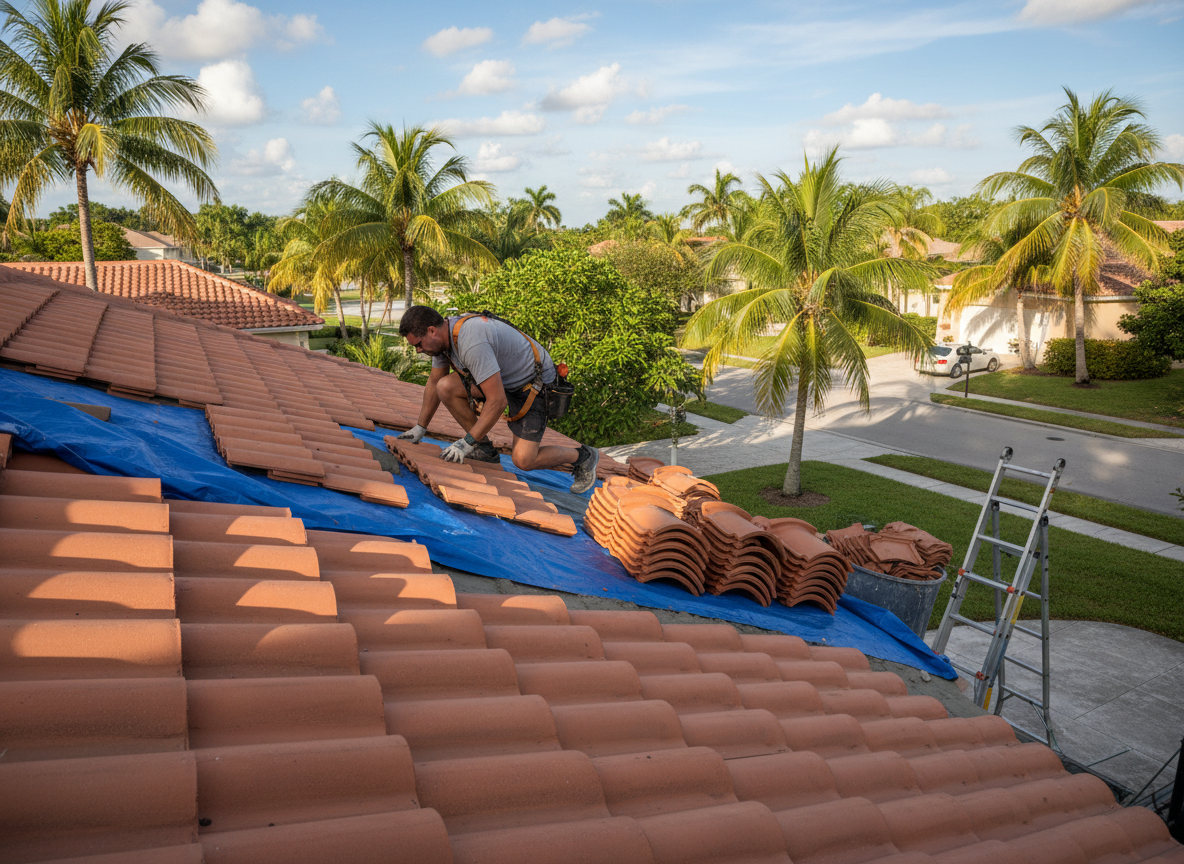
Coconut Creek homes often feature concrete or clay tile roofs installed decades ago that now show cracked tiles, failed underlayment, and lifting edges after repeated summer storms. Replacement starts with full deck inspection because many structures from the 1980s and 1990s have plywood that has delaminated near ridge vents or plumbing stacks. New systems use two layers of self-adhered underlayment meeting current Florida Building Code high-velocity hurricane zone requirements, followed by mechanically fastened tiles with stainless steel clips at every course in perimeter zones.
Edge cases appear frequently along the western side of the city where tree cover drops leaves and pine needles into valleys, trapping moisture and accelerating underlayment breakdown. Homeowners sometimes attempt spot repairs that leave mismatched profiles and create new leak paths at the transitions. Proper replacement includes resetting adjacent tiles on the same plane, installing new ridge vent closures rated for 150 mph winds, and sealing all flashings with compatible butyl tape rather than standard caulk that fails within two seasons.
Work at 5379 Lyons Rd begins with a 24/7 emergency tarping option when active leaks threaten interiors during the wet season. Crews remove existing tiles in sections to limit exposure, replace any deteriorated battens, and verify that new tile weight does not exceed the original design load on older trusses common in the area. Final walkthrough includes walking the roof with the homeowner to point out valley metal upgrades and ridge details that reduce future maintenance calls.
Tile color and profile must match existing neighborhood covenants in communities near the Promenade or along Sample Road; we stock several common Florida profiles to avoid long lead times. Proper ventilation is re-established or improved because many original installations lacked adequate intake at the eaves, leading to heat buildup and shortened shingle life on adjacent low-slope sections.
Technician insight
In Coconut Creek the thing that catches most people out with Tile Roof Replacement is the original 1980s plywood deck along the western neighborhoods that looks solid from below but delaminates the moment you step on it near the valleys; once you start pulling tiles you often find the underlayment has turned to powder from trapped moisture that never dried because the original install had almost no eave intake.
Cracked Tiles After Summer Storms
Homeowner noticed multiple cracked tiles and interior ceiling stains after heavy June rains. Inspection revealed failed original underlayment and several delaminated deck sheets near the ridge. We removed the tile system, replaced compromised plywood, installed new self-adhered underlayment and clipped tiles, then restored attic ventilation. No further leaks occurred through the next wet season.
How it works
- 1
Initial Assessment
Roof inspection from the ground and attic to document tile condition, underlayment failure points, and deck integrity specific to Coconut Creek wind exposure.
- 2
Material Selection
Choose hurricane-rated tiles and self-adhered underlayment that meet current Florida Building Code requirements for the zone.
- 3
Removal and Deck Prep
Systematic tile removal, batten replacement where needed, and deck repairs before new underlayment installation.
- 4
Installation and Detailing
Tile layout with proper fastening, valley and ridge upgrades, and flashing integration around penetrations.
- 5
Final Inspection
Walk-through verification of wind clips, ventilation, and cleanup before project sign-off.
Pricing
Cost depends on roof size, pitch, existing deck condition, and whether ventilation upgrades are required; we provide itemized estimates after inspection.